Folk tale
3 pages • Adapt a public domain story • 15-20 hours
Overview
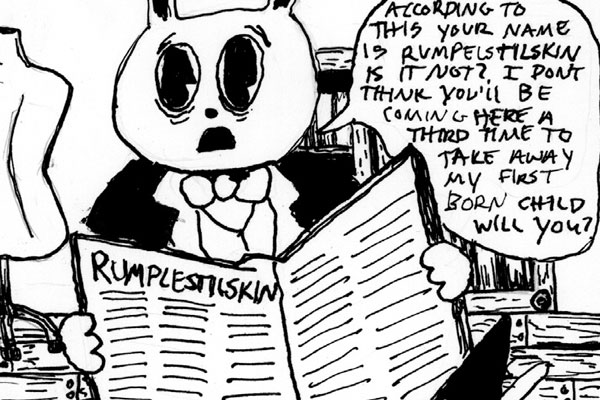
Write a full script and draw three pages of comics continuity (minimum) adapting a folk tale. Do whatever it takes to make it your own — alternative time periods, personal details, experimental techniques, a "lost ending" approach. Provide research, setting, and character notes.
Why this assignment exists
For working adults: Writing your own full script from scratch is a different skill than drawing someone else's. Adapting a folk tale gives you a story structure to work from while demanding that you make original creative choices — the same balance professionals face when pitching licensed properties or sequels.
For portfolio builders: A folk tale adaptation shows range. It demonstrates you can write, research, and draw — and that you can bring a recognizable story to life with a fresh visual identity. Editors notice when an artist can also write.
What you'll learn
- Writing a full script in professional format
- Pitching and developing a story idea with editorial feedback
- Adapting existing source material creatively
- Visual research for period, culture, and setting
- Managing dialogue density across a page
- Full pipeline from pitch through production
Workflow
Phase 1: Pitch meeting
One-on-one 15-minute Zoom breakout with your instructor to pitch your idea. Bring any supporting documents — character drawings, visual ideas, reference material. With editorial approval, you can begin your first draft script.
- Choose your folk tale
- Identify your adaptation angle
- Gather any early reference or character sketches
- Pitch to instructor in Zoom breakout
- Get instructor sign-off before proceeding
Phase 2: Script
Write a full script in Microsoft Word. Do whatever it takes to make it your own — alternative time periods, personal details, experimental techniques, a "lost ending" approach. Provide research, setting, and character notes. Expect at least two rounds of editorial feedback.
- Write first draft
- Revise based on instructor feedback
- Get instructor sign-off before proceeding
Phase 3: Thumbnails and pencil art
Beginning with thumbnails, tightly follow the approved script while allowing room for improvisation. Expect at least two rounds of editorial feedback. Letter and plan balloon placement before committing to final pencils.
- Thumbnail all pages
- Get instructor sign-off on thumbnails
- Pencil art and lettering on production paper
- Get instructor sign-off before proceeding
Phase 4: Inking
Upon instructor feedback and sign-off, ink art and lettering to completion.
- Ink all figures and backgrounds
- Ink lettering and borders
- Clean up and erase pencil lines
- Get instructor sign-off before proceeding
Phase 5: Production
Upon instructor feedback and sign-off, proceed to format your pages per these Photoshop production instructions.
- Scan all pages at correct resolution
- Follow Photoshop production instructions
- Export final files in required format
- Receive instructor sign-off
Requirements
- Minimum page count: 3
- Minimum balloons per page: 4 average
- Art dimensions: 9 x 14.5 inches
- Lettering: By hand
- Ames guide: 3.5 scale, two-thirds ratio
Common challenges
- Retelling without adapting: Simply redrawn the original story misses the point — your adaptation angle is what makes it a creative exercise, not a copying exercise.
- Underwriting dialogue: The four-balloon minimum exists for a reason — sparse pages often signal underdeveloped storytelling, not restraint.
- Script drift: Once approved, the script is your contract with yourself. Improvise visually, but don't quietly rewrite the story during the art phase.
Related resources
- Writing resources
- Original art dimensions
- Hand lettering tutorial
- Ames guide demo
- Photoshop production
- Next assignments
-
- Marvel Method
- Writer-artist collaboration, 3 pages
-
- Coda
- Showcase everything you've learned