About Art of the Comic Book
Art of the Comic Book is a college-level studio workshop focused on traditional ink-on-paper comic creation. You'll work from real scripts, use professional tools, and learn production workflows used by the industry.
This isn't about copying your favorite characters. It's about understanding fundamental craft that makes sequential storytelling work—whether you're creating superhero adventures, literary graphic novels, or experimental art comics.
What You'll Learn
Core Skills
- Sequential storytelling — Transform scripts into compelling visual narratives through panel composition and pacing
- Traditional inking — Master brushes, dip pens, and crow quills with line weight control and spot blacks
- Character design — Create consistent, expressive characters across multiple panels and pages
- Professional production — Understand dimensions, scanning, corrections, and print preparation
Process Over Product
No single "correct" way to make comics. Study approaches from Harvey Kurtzman, Alex Toth, Will Eisner, and contemporary independent artists to help you discover your own creative process.
Your instructor
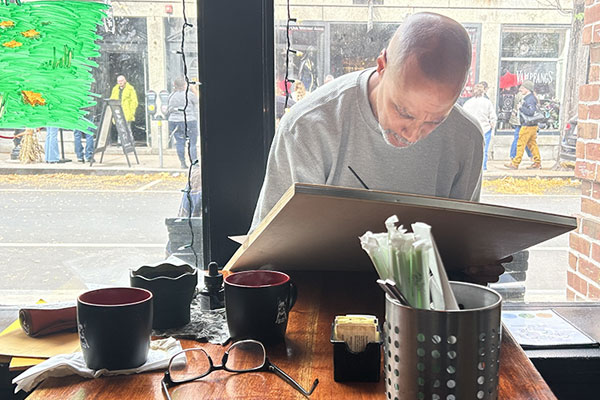
David Marshall has been teaching comic book art since 1995, most recently at Massachusetts College of Art and Design. His work has been published by Fantagraphics Books, SpiderBaby Graphix, and FantaCo Enterprises.
Through Marshall Art Studio, David provides web design, print design, and illustration while maintaining an active comics practice. He's a multiple participant in 24-Hour Comics Day and continues creating his ongoing webcomic series Inky Stories.
His teaching emphasizes clear content presentation and hands-on studio practice. Classes combine creative fundamentals (anatomy, perspective, composition) with current production methods and industry context.
Teaching philosophy: Master the tools first, then break the rules intelligently.
For working adults: "You're here to learn, not to already know." Classes include ages 18-65 with all skill levels welcome.
For portfolio builders: Assignments create presentation-ready work. David provides industry-standard feedback—the same critiques editors give professionals.
Course Outcomes
After completing this workshop, you'll be able to:
- Creative Skills
- Tell stories visually using professional comics techniques
- Apply anatomy, perspective, and composition to sequential art
- Develop solutions by studying historical and contemporary artists
- Work independently and collaboratively on visual narrative projects
- Technical Skills
- Use traditional media (brushes, pens, inks) with confidence
- Prepare artwork using current production workflows
- Critique your own work and others constructively
- Present portfolio work professionally
- Industry Knowledge
- Understand comic book production methods and business environment
- Recognize professional opportunities in the field
- Navigate the relationship between artistic vision and commercial requirements
How It Works
Studio Workshop Format
Small class sizes (12-15 students) with individual attention. Work on assignments during class time while receiving real-time feedback and guidance.
Real-World Assignments
Every exercise mirrors actual professional work—adapting scripts, creating sequential pages, inking finished artwork, and assembling portfolio-quality pieces.
Master the Process
Study how Harvey Kurtzman, Alex Toth, Will Eisner, and contemporary artists approached their work. Understand different creative processes and find your own path.
Course Policies
Attendance
Regular attendance essential. Missing more than three classes may affect your final grade.
Assignments
Due at beginning of class. Late work accepted within one week for half credit.
Studio Behavior
Respect for everyone required. No food/beverages near artwork. Phones off during class.
| Grade | Range | Description |
|---|---|---|
| A to A- | 90-100 | Excellent work showing comprehensive understanding |
| B+ to B- | 75-89 | Good work with noticeable perception and originality |
| C+ to C- | 70-76 | Satisfactory with reasonable understanding |
| D | 60-69 | Marginal with limited perception |
| F | < 60 | Unacceptable or excessive absences |
Outside resources
- My Comics
- Inky Stories My ongoing webcomic with short stories spanning satire, horror, romance, sci-fi, and crime fiction
- Read my comics
- Video Demos
- Canadian artist Denis Rodier Demonstrates inking and drawing techniques
- Watch Rodier's demos
- Community
- Boston Comics Roundtable (BCR) Local creators of all levels meet online every week to share work, plan events, and publish
- Visit BCR today
- Ready to start?
- View current schedule
- Contact with questions